
This article was published in the Read the Label series at Cosmetics & Toiletries.
To anyone who has set foot in a Sephora or Ulta Beauty store recently, it is clear that the beauty retail environment has changed. In addition to traditional prestige fragrances and anti-aging products, stores now prominently feature colorful displays of relatively affordable skincare, body care and fragrance mists that appeal to younger consumers. Many of the shoppers browsing these displays are teenagers.
The teenagers are known as Sephora kids – middle to high school age children who follow the current craze for skin care products in that age group. This phenomenon began in the mid 2010s when teenage kids started posting makeup tutorials on YouTube and later Instagram and TikTok. Brands such as Drunk Elephant, The Ordinary and Glow Recipe were popular for their ingredient-centered positioning.
The COVID-19 pandemic gave kids a lot of time to browse social media and experiment with skin care. TikTok’s algorithm promotes skin care routines and product reviews in a visual format, exposing ever younger audiences to prestige skin care products. Eventually, TikTok videos showed groups of children as young as 7 years old buying skin care products at Sephora including serums and exfoliants1. A meet and greet event in New Jersey with a TikTok teen influencer attracted thousands of young fans2.
Many of these skin care products contain antiaging actives, retinol or strong exfoliants, which are not necessary for young skin and potentially harmful. Unaware of the risks, children applied multiple products each containing alphahydroxy acids (AHAs) on top of each other, which often caused burning, skin irritation, and redness1. With little parental oversight evident, such effects caused consumers and dermatologists to question brand and retailer marketing to kids.
Responding to this consumer shift, brands began to market gentle skin care, lower cost sample sizes and colorful packaging, specifically for this age group. An example is Amika hair care, whose packaging is covered with bright, flowery patterns and whose products are offered in sets and starter packs priced between $30 and $60. Sephora is emphasizing minimalist routines for teens, consisting of a cleanser, moisturizer, and sunscreen, rather than regimens with a lot of actives3. Its marketing messages mention skin barrier health, a more appropriate focus for young customers. Meanwhile, Ulta is engaging teenagers with in-store birthday programs and teen-oriented events4. Drunk Elephant has opted to refocus its brand away from kids to adult customers5.
Cosmetic products that are currently popular with tweens and teens are more innocuous lip balms, hand sanitizers, moisturizers and perfume mists. These products are offered in very colorful, toy-like packaging and generally priced below $506. Bestselling brands include Summer Fridays, Touchland and Sol de Janeiro.
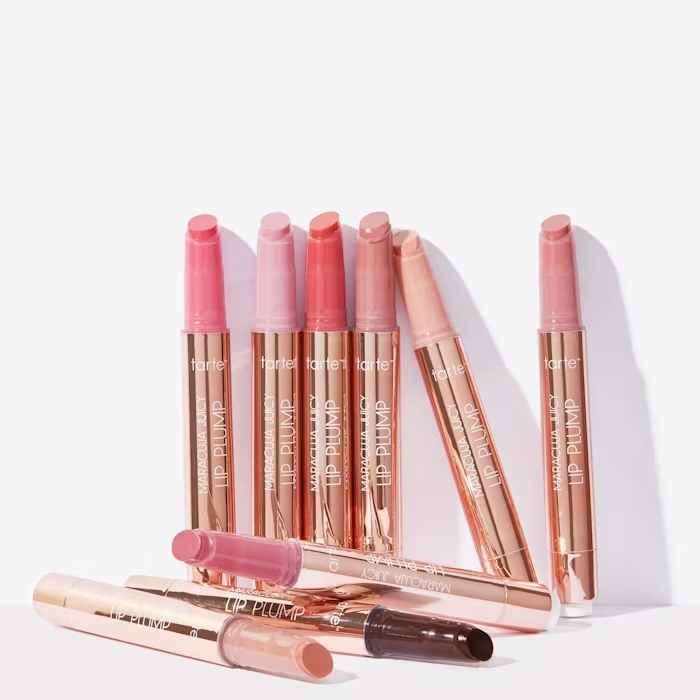
An example of kid-oriented packaging is Maracuja Juicy Lip Plumping Peptide Gloss by Tarte Cosmetics. This product includes one of 12 collectible mystery charms in each package in an attempt to convince young customers to keep buying.
Recent consumer research illustrates why retailers and brands are paying a lot of attention to this demographic. Teen consumers spend roughly $336–$342 per year on beauty products7. Sephora is the preferred beauty retailer for about 40% of upper-income teens, making it the leading prestige destination for this group, with Ulta Beauty second with roughly 26–27% preference among teens.
Teen beauty spending is concentrated in makeup, skincare and fragrance, categories with relatively high margins. Although teens and tweens may spend less individually than adults, they are influential trend drivers and represent potential long-term customers for brands.
The ingredient list of the Tarte lip gloss lists over 60 ingredients.
INCI List: Tarte Cosmetics Maracuja Juicy Lip Plumping Peptide Gloss with charm
Tridecyl Trimellitate, diisostearyl malate, hydrogenated styrene/methylstyrene/indene copolymer, caprylic/capric triglyceride, polybutene, pentaerythrityl tetraisostearate, silica dimethyl silylate, bis-diglyceryl polyacyladipate-2, synthetic beeswax, passiflora edulis seed oil, tocopheryl acetate, vitis vinifera (grape) seed oil, adansonia digitata seed oil, butyrospermum parkii (shea) butter, cocos nucifera (coconut) oil, paeonia suffruticosa seed oil, persea gratissima (avocado) oil, simmondsia chinensis (jojoba) seed oil, tripeptide-29, ricinus communis (castor) seed oil, caffeine, sodium hyaluronate, hydrogenated castor oil, hydrolyzed pea protein, lycium barbarum fruit extract, euterpe oleracea fruit extract, malpighia punicifolia (acerola) fruit extract, punica granatum fruit extract, passiflora incarnata fruit extract, citrullus lanatus (watermelon) fruit extract, fragaria vesca (strawberry) fruit extract, citrus limon (lemon) fruit extract, vaccinium angustifolium (blueberry) fruit extract, prunus persica (peach) fruit extract, vaccinium macrocarpon (cranberry) fruit extract, palmitoyl tripeptide-1, tocopherol, palmitoyl hexapeptide-12, water/aqua/eau, cyclodextrin, ethylhexyl palmitate, polyglyceryl-2 diisostearate, polyglyceryl-2 triisostearate, propanediol, propylene carbonate, sorbitan isostearate, stearalkonium hectorite, tribehenin, triethoxycaprylylsilane, phenoxyethanol, pentaerythrityl tetra-di-t-butyl hydroxyhydrocinnamate, flavor/aroma, limonene, linalool, citral, pinene, benzaldehyde, terpinolene, terpineol, menthol. (+/-): Titanium Dioxide (CI 77891), yellow 5 lake (CI 19140), red 7 lake (CI 15850), iron oxides (CI 77491, CI 77499).
The formula is an anhydrous structured oil system with film formers, emollients, waxes and suspended pigments. The emollient base consists of tridecyl trimellitate, diisostearyl malate and capric/caprylic triglyceride, which provide gloss and lubrication and form a highly viscous, hydrating barrier on the lips. Another important ingredient is polybutene, a viscous polymer that contributes shine and adhesion. The emollients also help to disperse the colored pigments.
A film former present at a high level in the formula is the hydrogenated styrene/methylstyrene/indene copolymer, which also helps produce a shiny surface. The emollient oils are structured by silica dimethyl silicate and stearalkonium hectorite functionalized clay. These ingredients help disperse the pigments and prevent settling.
An important component is also the bis-diglyceryl polyacyladipate-2, a lanolin substitute that provides a soft feel on the lips and helps disperse the pigments and blend the waxes with the liquid oils.
The wax in the formula is primarily synthetic beeswax, an alternative to natural beeswax made up of fatty acids, esters and alcohols. This gives the formula body while maintaining the glossy surface.
The Tarte formula contains many botanical oils and extracts, starting with passiflora edulis seed oil or maracuja oil, which is in the name of the product. This is derived from passion fruit seeds. Such a complex mixture of plant oils has the potential for increased exposure to allergens, which is especially important for children with sensitive skin.
Other ingredients not suitable for young consumers are caffeine and menthol, as well as the potential fragrance allergens listed at the end of the ingredient list. These are likely present at low levels, but can still cause irritation in sensitive consumers. Dermatologists generally recommend products for children that are fragrance- and menthol-free.
The formula also contains palmitoyl hexapeptide-12, an anti-aging peptide that was shown to penetrate the skin and help repair damaged lipid structures, enhancing hydration and strengthening the skin barrier8. In a waxy lip gloss formula skin penetration is likely minimal, but it’s questionable if anti-aging ingredients should have a place in products marketed to children.
In balance, the Tarte Cosmetics Maracuja Lip Gloss is a complex formula that may be a good lip gloss, but it is not particularly suitable for teens and tweens, even though it is clearly marketed to that demographic.
References
- Molly Hales, MD, PhD; Sarah Rigali, BS; Amy Paller, MD; Walter Liszewski, MD; Tara Lagu, MD, MPH, “Pediatric Skin Care Regimens on TikTok”, Pediatrics 2025, 156 (1), https://doi.org/10.1542/peds.2024-070309.
- Anthony G. Attrino, “Thousands of screaming fans overwhelm American Dream mall for teen YouTube star’s appearance,” NJ.com Sep 8, 2025.
- Aditi Bharade, “The CEO of Sephora says your teenager only needs to be buying 3 skincare products”, Business Insider Jan 17, 2025.
- Erica La Sala, “Ulta Beauty Invites Tweens And Teens To Celebrate Birthdays In Its Stores With New Party Program”, Beauty Independent Sep 5, 2025.
- Carol Lee, “Sounds Like Drunk Elephant Is Moving on From the Sephora Tweens”, The Cut Jan 12, 2026.
- Brigette Marshall, “My Sephora Tween Influenced My Beauty Routine—These Are the Products We Both Love”, The Everymom April 25, 2025.
- Piper Sandler, “Taking Stock With Teens Survey, Fall 2024”, retrieved on March 6, 2026.
- Cosimo Ligorio, Elham Tavasoli, Nevena Karaman-Jurukovska, Abraham Ittycheri, Anna M. Kotowska, Mohammed H. Khan, David J. Scurr, Shovit A. Gupta, Leah V. Moogan, Jaime Emmetsberger, Fake Lu, Guy K. German, Tom Mammone, Alvaro Mata, “Noninvasive Monitoring of Palmitoyl Hexapeptide-12 in Human Skin Layers: Mechanical Interaction with Skin Components and Its Potential Skincare Benefits”, ACS Appl Bio Mater. 2025 Feb 18; 8(3):2340–2355. doi: 10.1021/acsabm.4c01816